Floral Ornament Mandala Review for Business Merch
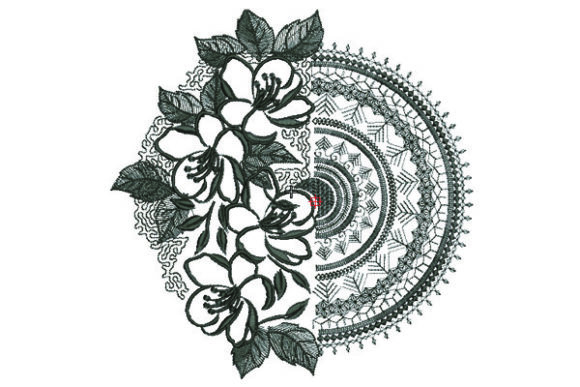
When I first opened the Floral Ornament Mandala machine embroidery design, I immediately recognized its potential for small business merchandise. As someone who has reviewed hundreds of embroidery files for commercial use, I look for designs that balance visual appeal with practical production needs. This mandala delivers a refined, symmetrical pattern that reads as both elegant and approachable. It avoids the overly intricate look that can cause trouble in production, making it a strong candidate for branded patches, custom apparel, and product labels. For any shop owner, café, boutique, or handmade brand exploring custom apparel or embroidered patch creation, this design merits a close look before you commit thread to fabric.
First Impression: Professional Yet Warm
The Floral Ornament Mandala strikes me as a design that bridges classic ornamentation with modern commercial needs. It feels professional without being cold, and decorative without being fussy. The floral center and ornamental border suggest a handcrafted quality that aligns well with handmade product brands, artisan bakeries, florists, and creative studios. If you run a pet brand or a local café, the mandala can serve as a subtle brand mark rather than a loud logo. The symmetry gives it a polished look that builds customer trust, while the organic floral elements keep it friendly. This is not a stark geometric mandala; it has warmth, which matters when you want your merchandise to feel personal.
Embroidered Patches for Bags and Uniforms
For small business owners looking to create embroidered patch products, the Floral Ornament Mandala works well as a standalone emblem. I would recommend testing it at a patch size of around three to four inches. At that scale, the floral details remain visible and the ornamental border holds its shape. Sewn onto a tote bag or a work shirt, it reads as a premium accent. The design does not rely on fine lettering, which is a common failure point in patch production. Instead, the mandala form itself becomes the brand identifier. This makes it ideal for businesses that want a visual mark rather than a text-heavy logo.
Apron and Cap Embroidery
On aprons, the Floral Ornament Mandala can be placed as a chest centerpiece or a subtle pocket accent. For a bakery or café, this placement adds a handmade touch that customers notice. For cap embroidery, I advise caution. The curved surface of a cap front can distort symmetrical designs. You will need to test the embroidery file on a curved hoop or use a cap frame to ensure the mandala does not pull unevenly. If the design is too large for the cap crown, it may wrap awkwardly. I suggest reducing the size to no more than two and a half inches wide for cap fronts, and checking the stitchout carefully.
Tote Bags and Product Packaging Accents
Tote bags are a natural home for this design. The Floral Ornament Mandala can be embroidered as a large central motif or as a smaller corner mark. For tote bag design, the symmetrical shape works well because it does not require precise alignment with a bag edge. You can center it easily. Beyond totes, consider using this mandala on product packaging accents. A small embroidered patch sewn onto a linen bag or a fabric gift wrap can elevate your brand identity and create a memorable unboxing experience. This is a strategy that handmade brands and Etsy sellers often use to differentiate their finished product.
Small Patch Sizes and Curved Surfaces
While the Floral Ornament Mandala is robust at medium sizes, it becomes less reliable below two inches. The floral details and ornamental lines may lose definition, and the stitch density can become too high for small areas. If you plan to use it as a tiny label on a collar or a small cap side, I recommend reducing the design in your software and running a test sewout before production. Curved surfaces, such as sleeve caps or curved bag pockets, also require careful hooping and a quality stabilizer to prevent distortion.
High Stitch Density and Fabric Texture
The Floral Ornament Mandala likely has moderate to high stitch density due to the layered ornamentation. On lightweight fabrics like silk or thin cotton, this can cause puckering or showthrough. I recommend using a cutaway stabilizer for knit fabrics and a tearaway for stable wovens. For textured fabrics such as linen or canvas, the design may need slight underlay adjustments to keep the satin stitches smooth. Always test on your actual fabric before committing to a bulk run.
Dark Uniforms and Frequent Washing
If you embroider this design on dark uniforms or work shirts that require frequent washing, pay attention to thread color contrast. A light gold or white thread on a dark background will pop well, but the design may show wear over time if the stitch density is too dense. For items that see heavy washing, such as aprons or caps, I suggest using a high-quality polyester thread and a dense underlay to prevent distortion. The ornamental border should hold up, but the finer floral details may be the first to show wear if the design is not properly stabilized.
Impact on Brand Identity and Customer Trust
Using a design like Floral Ornament Mandala on your merchandise signals that you care about detail. Customers associate well-embroidered motifs with quality and professionalism. For a small business, this can translate directly into trust and perceived value. The mandala format is also versatile across different product types. If you use it on a tote bag, an apron, and a cap, you create visual consistency that strengthens your brand identity. This is especially valuable for small business merch lines where you want every item to feel cohesive.
For Etsy sellers and handmade product brands, the design adds a handcrafted feel that buyers appreciate. It does not look like a mass-produced logo. Instead, it reads as artisanal, which can justify a higher price point on your finished product. When customers see a well-executed mandala on a piece of merchandise, they perceive the brand as established and thoughtful. This is a subtle but powerful advantage in a crowded marketplace.
Practical Embroidery Designer Notes
Before you run production, here are the steps I take with any new machine embroidery design like this one:
- Test in black and white first. Convert the design to a single color and sew it out. This reveals any spacing issues, pull compensation problems, or unclear details without wasting thread colors.
- Check if it works at small patch size. Scale the design down to your intended patch dimension and examine the stitchout. If the floral centers or ornamental lines blur, adjust the size or simplify the design.
- Review thread color contrast. The Floral Ornament Mandala likely uses multiple colors. Ensure that adjacent colors have enough contrast to read clearly from a distance. Low contrast can make the mandala look muddy.
- Inspect spacing. Look for gaps between the ornament layers. If the spacing is too tight, the design may look like a solid mass. If too loose, it may lack structure.
- Confirm hoop size. Verify that the design fits within your hoop dimensions at the intended size. Hoop size restrictions can force you to reposition or resize, which affects the final look.
- Test on real fabric. Always sew a sample on your actual production fabric. Linen, canvas, cotton twill, and performance fabrics all behave differently.
- Use proper stabilizer. For this design, I recommend a medium-weight cutaway stabilizer for most fabrics. If you are sewing on stretchy or textured material, use a heavier stabilizer or add a layer of topper.
- Create a mockup for client approval. Before you sew a batch, generate a printable mockup or a digital mockup showing the design on the actual product. This prevents misalignment and ensures the client agrees with placement and size.
- Compare it beside other design assets. If you already use other logos or motifs in your design assets, place the Floral Ornament Mandala next to them to check visual harmony. Mismatched styles can weaken your brand identity.
- Confirm commercial licensing. This design comes with a multipurpose embroidery file, but verify the license terms for commercial embroidery use. Some files allow unlimited use, while others restrict production volume or require attribution. Know the terms before you sell merchandise.
Final Thoughts on the Floral Ornament Mandala
As a professional embroidery designer, I see the Floral Ornament Mandala as a solid addition to any small business merch lineup. It is versatile enough for apron embroidery, cap embroidery, tote bag design, and embroidered patch projects. Its visual personality is both professional and warm, which works well for cafés, boutiques, florists, bakeries, creative studios, and handmade brands. The design can support your brand identity and help you build customer trust through consistent, high-quality merchandise.
That said, it is not a set-it-and-forget design. You need to test it at your intended size, on your chosen fabric, and with the right stabilizer. Pay attention to stitch density, thread contrast, and placement on curved surfaces. If you take the time to optimize the digital embroidery file for your specific use case, the Floral Ornament Mandala can become a repeat performer in your product line. Whether you are creating staff uniforms, customer gifts, event merch, or Etsy shop assets, this mandala offers a reliable path to a professional finished product.