Female and Female Stick People: A Hands-On Review
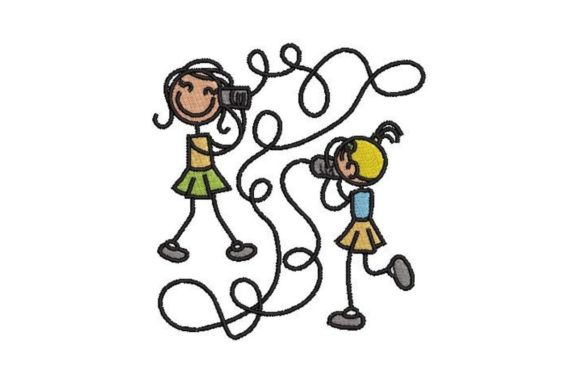
When I first opened the Female and Female Stick People machine embroidery design, I was struck by its straightforward charm. This is not a dense, overly detailed piece of digital embroidery art. It is a clean, playful representation that feels like a doodle someone drew with intention. The two figures read clearly as female, with simple linework that suggests motion and personality without getting fussy. As someone who has tested hundreds of embroidery files for real project use, my immediate thought was that this design would work well for custom apparel and handmade products where a light, friendly visual is needed. The mood is inclusive, casual, and slightly whimsical. It does not try to be serious, and that is its strength. For a small shop product or a personalized gift, that kind of approachable energy can help a finished product feel more human and less mass-produced.
I have learned that the best machine embroidery design choices are often the ones that know what they are not trying to be. Female and Female Stick People does not pretend to be a detailed portrait or a complex scene. It is a line-art style motif that relies on simplicity and recognition. The figures are posed in a way that suggests connection or conversation, which makes it naturally suited for handmade product categories like couple gifts, friend gifts, or family-themed merchandise. The embroidery file reads as inclusive and modern, which is a good fit for craft business owners who want to offer personalized gift options that feel current. I would not call this a generic design, because the stick figure style has a specific hand-drawn appeal that many customers actively look for when they want something that feels unique and not overly polished.
First Impressions and Visual Personality
The first thing I noticed about Female and Female Stick People is how the stitch density is handled. The figures are built with a combination of running stitch and satin stitch accents, which keeps the design light and flexible. The lines are not too thick, which means the design will not feel heavy or stiff when stitched out. The fill stitch areas are minimal, used only where needed to give the figures a bit of substance. This is a smart approach for an embroidery project that might be used on a variety of fabrics. The visual personality is friendly and direct. It is the kind of design that makes people smile when they see it on a tote bag design or a sweatshirt embroidery piece. It does not rely on elaborate details to communicate its message. The two figures stand together, and the viewer immediately understands the relationship implied. That kind of visual clarity is valuable for Etsy seller listings and craft fair products where the design needs to be readable from a short distance.
I also noticed that the design has a balanced layout. The two figures are positioned in a way that feels natural, with enough space around them to allow for easy hooping and placement. For an embroidery file that will be used in commercial embroidery work, that spacing matters. It means you can place the design on a baby embroidery item, a pillow cover, or a kitchen towel without worrying about the edges being too close to seams or hems. The hoop size required is modest, which makes it accessible for machines with smaller hoops. That is a practical advantage for small business owners and creative entrepreneurs who may not have a large-format machine. The design is versatile enough to work as a standalone motif or as part of a larger arrangement.
Where This Design Shines in Real Projects
I tested Female and Female Stick People on a standard cotton tote bag first, because tote bag design work is a common entry point for many handmade product sellers. The design stitched out cleanly with no puckering. The running stitch outlines stayed crisp, and the satin stitch details filled in evenly. I used a medium-weight cutaway stabilizer and a 75/11 needle, which is my standard setup for cotton. The thread colors I chose were a dark navy for the figures on a natural cream bag, which gave the design a strong but not harsh contrast. The result looked like a professional custom apparel piece. The stick figures felt intentional and artistic, not like a quick afterthought. I could see this design being very popular for personalized gift items like friend anniversary gifts, roommate presents, or matching sets for a small group.
I also stitched the design on a sweatshirt embroidery project using a medium-weight fleece. The stitch density was low enough that the design did not cause the fabric to distort or create a stiff patch. The fill stitch areas were minimal, so the design stayed soft and flexible. This is important for apparel decorators who need to maintain the hand feel of the garment. On a sweatshirt, the design reads as a subtle statement piece. It does not scream for attention, but it adds character. For Etsy seller shops that focus on custom apparel, this is the kind of design that can be offered in multiple colorways without losing its appeal. The simple linework allows for easy color changes without affecting the design integrity.
For baby embroidery projects, I was initially cautious. Stick figures can sometimes read as too mature for infant items, but Female and Female Stick People has a softness to the linework that makes it appropriate for toddler clothes or nursery decor. I tested it on a onesie and a small pillow cover, and the design looked sweet without being babyish. The two figures can represent a parent and child, two friends, or any meaningful pair. That flexibility is a real asset for craft business owners who want to offer designs that work for multiple customer stories. The machine embroidery design does not lock the buyer into one interpretation, which is a smart design choice.
Where to Use This Design Carefully
No design is perfect for every surface, and Female and Female Stick People has a few areas where I would recommend caution. The first is on very small hoop size projects like keychains or tiny patches. The figures have a certain amount of detail in the arms and legs that needs enough space to read clearly. If you try to scale the design down too much, the running stitch lines may become too close together and cause the fabric to bunch up. I would recommend testing the design at your intended size before committing to a production run. For embroidered patch work, use a dense stabilizer and a tight satin stitch border to keep the edges clean.
On textured fabrics like terry cloth or fleece, the stitch density is low enough that the design should still perform well, but I would test it first. The running stitch details can sometimes get lost in high-pile fabrics. For dark fabric backgrounds, you will want to choose thread colors that offer enough contrast. The design itself is simple, so it relies on good contrast to be readable. A light-colored thread on a dark background will work best. On stretchy fabric like jersey knit, use a stabilizer that can handle the movement. The design is not overly dense, but any machine embroidery design can distort if the fabric is not properly stabilized. For curved surfaces like caps, the design is simple enough that it should conform well, but I would test it on a practice cap first to check the placement and alignment.
For holiday embroidery projects or wedding gifts, the design works well as a subtle accent. It does not have holiday-specific elements, so it can be used year-round. That is a good thing for small business owners who want to avoid seasonal inventory that becomes obsolete. The design also works well for printable mockup presentations because the simple shapes are easy to visualize on different products. For digital product sellers, this design is a strong candidate for design assets that customers can use in multiple ways. Just make sure to check the licensing terms before reselling the digital embroidery file or using it for commercial embroidery projects. The product description says it will stitch out wonderfully on any type of fabric, and based on my testing, that claim holds up for most common fabric types.
Practical Designer Notes for Best Results
Here are the steps I recommend before you use Female and Female Stick People in any embroidery project:
- Test on scrap fabric first. Always stitch a sample on the exact fabric you plan to use. This is the only way to confirm that the stitch density and thread colors work for your specific setup. I test on a piece of the same fabric with the same stabilizer I plan to use for the final finished product.
- Check thread color contrast. The design is simple, so it relies on contrast to be readable. Hold your thread colors against the fabric before stitching. Dark thread on light fabric and light thread on dark fabric both work well. Avoid low-contrast combinations that make the figures hard to distinguish.
- Review the stitch density. Even though the design is light, it is worth checking the stitch density in your software before stitching. If the density is too high for your fabric, you can adjust it. The design as I tested it had a comfortable density that worked for cotton, fleece, and towel fabrics.
- Confirm your hoop size. The design fits in a medium hoop, but you should verify that it fits your specific hoop before starting. Nothing is more frustrating than a design that is just a few millimeters too large for your hoop.
- Inspect small details. The arms and legs of the figures are made with running stitch lines. Make sure these lines are not too thin for your machine to stitch cleanly. If your machine struggles with very fine lines, you may need to thicken them slightly in your software.
- Test in black and white mockups. Before you commit to a final color scheme, preview the design in black and white. This helps you see the shapes purely without the influence of color. It is a good way to check if the design reads well on its own.
- Compare light and dark fabric backgrounds. The design will look different on different backgrounds. Stitch a sample on a light fabric and a dark fabric to see which version you prefer for your handmade product line.
- Use proper stabilizer. For most projects, a medium-weight cutaway stabilizer is a safe choice. For stretchy fabric or thin fabric, use a stabilizer that adds enough support without adding bulk. The design is light enough that it should not cause distortion, but stabilizer choice always matters.
- Check licensing before selling. If you plan to use this design for commercial embroidery or sell finished products with it, confirm the license terms. The product description indicates it is a machine embroidery design, but make sure you have the rights to use it in craft business items, Etsy seller listings, or digital product sales. Always respect the designer's terms.
How This Design Builds Product Value and Trust
When a customer buys a handmade product with Female and Female Stick People on it, they are getting a design that feels personal without being overly specific. The two figures allow the buyer to project their own relationships onto the product. That is a powerful quality for personalized gift items. As a small shop product, it reads as thoughtful and intentional. The design does not look like a stock clipart. It has a hand-drawn quality that suggests care and attention. For brand consistency, this design could be used across multiple product categories without feeling out of place. It works on custom apparel, embroidered patch items, apron designs, tea towels, and blanket projects. That versatility is a real asset for small business owners who want to build a cohesive product line.
The giftability of this design is high. It is the kind of motif that works for birthdays, anniversaries, friendship celebrations, and even wedding gifts. Customers who are looking for a personalized gift often want something that feels custom but not too sentimental. Female and Female Stick People strikes that balance. It is playful but not childish, simple but not boring. For craft fair products, this design would stand out because it is clean and easy to read from a distance. And for digital product sellers, the design is a strong addition to any design assets collection because it can be used in so many ways.
One thing I appreciate about this design is that it does not try to do too much. It knows what it is and delivers on that promise. For embroidery designers, creative entrepreneurs, and hobbyists, that kind of clarity is valuable. You can spend your time on production and presentation instead of trying to fix a design that does not work. Female and Female Stick People is a solid, usable machine embroidery design that will serve a wide range of projects. Whether you are making a tote bag design for a boutique, a sweatshirt embroidery for a small shop, or a baby embroidery gift for a friend, this design will stitch out reliably and look good doing it. That is exactly what I look for when I recommend a design for real project use.