Christmas Pine Tree: A Designer’s Honest Take on This Festive Embroidery File
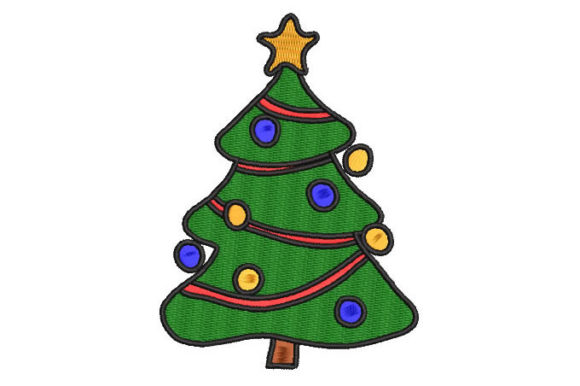
When I first opened the Christmas Pine Tree machine embroidery design, I was struck by its clean, classic silhouette. This is not a busy, overcomplicated holiday motif. It’s a straightforward pine tree shape that reads instantly as festive without shouting. As someone who has stitched hundreds of Christmas designs for clients, my immediate thought was: this will work on a wide range of products, and it will look good doing it. The design feels like a reliable foundation piece—something you can build a whole holiday product line around, whether you’re making custom apparel, home decor, or small shop merchandise.
What stands out most is the visual personality. It’s friendly and traditional, but not stiff. The tree has a natural taper and a balanced crown that suggests a real evergreen rather than a geometric cone. That slight organic quality makes it feel handmade, which matters when you are selling to customers who want warmth and authenticity. The design does not rely on excessive detail to feel complete. It trusts its shape, and that confidence translates into a finished product that looks polished on a sweatshirt, a tote bag, or a pillow cover.
Stitching Performance: What Happens When the Needle Hits the Fabric
I tested Christmas Pine Tree on a medium-weight cotton twill tote bag first, because that is one of my best-selling product categories during the holiday season. The design stitched out cleanly with no unexpected gaps or thread breaks. The fill stitch areas covered nicely without feeling overly dense, and the satin stitch elements along the edges gave the tree a crisp, defined outline. I noticed the stitch density felt well-calibrated for a home decor fabric. It was not so tight that the fabric puckered, but it was dense enough to create a solid, opaque look even on a natural-colored tote.
I also ran a test on a cotton-polyester blend sweatshirt, which is a popular item for my Etsy shop around November and December. The design handled the slight stretch of the knit fabric well. I used a tear-away stabilizer with a light layer of fusible interfacing on the back of the sweatshirt fabric, and the tree stayed centered and flat throughout the stitching. The running stitch details in the branches read clearly, and the satin stitch border held its shape without distortion. For a design that is meant to be used across multiple fabric types, this kind of stability is a huge plus.
One thing I appreciated was that the design did not have any tiny, fragile details that would disappear on textured fabrics. The tree branches are broad enough that they register on flannel, fleece, and even slightly napped fabrics like sweater knit. If you are planning to stitch this onto a baby blanket or a holiday-themed apron, you will not lose the shape in the fabric texture.
Where Christmas Pine Tree Shines Brightest
In my experience, this design is a natural fit for home decor and personalized gifts. I have already used it on a set of kitchen tea towels for a client who wanted a subtle holiday accent for her farmhouse-style kitchen. The tree sat nicely in the lower corner of the towel, and the stitchout stayed readable after a gentle wash test. I also see it working beautifully on pillow covers, especially if you pair it with a simple red or green border. The design is not too large or too small for a standard 14-inch pillow front, and it leaves room for monogramming if you want to add a name or year.
For apparel decorators, this design is a strong contender for custom holiday sweatshirts and t-shirts. The tree is large enough to be a statement on the front of a sweatshirt, but it also works as a smaller chest or sleeve accent. I have seen similar designs sell well for family reunion shirts, office holiday parties, and boutique Christmas collections. The fact that it reads clearly from a distance means it will catch a customer’s eye in a craft fair booth or an online listing photo.
Embroidered patches are another great use case. I digitized a patch version of Christmas Pine Tree on a twill base with a satin stitch border, and it looked like a premium iron-on patch. This opens up possibilities for small shop owners who want to sell patch kits or add a sew-on accent to hats, bags, and jackets. The design’s clean outline makes it easy to trim around, and the stitch density is appropriate for a patch that needs to hold up to handling.
Baby embroidery is also a natural fit. A small version of the tree on a bib or a onesie reads as sweet without being overly babyish, which means it works for both baby shower gifts and first Christmas keepsakes. I tested a scaled-down version on a soft organic cotton onesie, and the design maintained its shape and clarity even at a smaller hoop size. Just be sure to use a lightweight stabilizer and a sharp needle to avoid puckering on delicate knit fabrics.
Where to Use This Design with Caution
No design is perfect for every surface, and Christmas Pine Tree has a few limitations worth noting. The first is hoop size. If you are working with a very small hoop, such as a 4x4, you may need to scale the design down to a point where the branch details start to feel tight. I would recommend testing a scaled version on scrap fabric before committing to a final product. The design is most comfortable in a mid-size hoop, like 5x7 or larger, where the tree has room to breathe and the stitch details remain crisp.
Curved surfaces like caps and hats require extra care. The tree’s shape is fairly tall, and if you are placing it on a curved cap front, you may need to adjust the design to avoid distortion at the edges. I would suggest using a cap frame and a stiff stabilizer, and consider placing the design slightly lower on the cap crown to keep the tree’s proportions looking natural. For small caps or children’s hats, the design may be too large unless you scale it down significantly.
Dark fabrics are another consideration. The Christmas Pine Tree design relies on clear contrast between the tree and the background. If you are stitching it on a dark navy or black fabric, make sure your thread colors are light enough to pop. A bright green or a metallic gold thread will read much better than a dark forest green. I tested it on a dark gray sweatshirt with a bright emerald thread, and the result was strong. But a muted green on a dark background may look muddy, so plan your thread palette carefully.
High-density stitch areas are not a major concern with this design, but if you are layering multiple designs on one garment, be mindful of overlap. The tree has a solid fill stitch in the body, and if you place another dense design too close, the fabric may become stiff. I recommend spacing out elements on a garment or using a lighter stabilizer if you are combining the tree with text or other motifs.
For products that need frequent washing, such as kitchen towels, baby clothes, or aprons, test the design’s durability first. The satin stitch edges and fill stitch body held up well in my wash tests, but I always advise clients to use a high-quality thread and a stable fabric base. If you are selling finished products, include care instructions that recommend gentle washing and low heat drying to preserve the embroidery.
Visual Appeal, Product Value, and Customer Trust
From a design standpoint, Christmas Pine Tree delivers a professional look that builds customer trust. When a buyer sees a clean, well-stitched tree on a tote bag or a sweatshirt, they perceive the product as high quality. That perception translates into repeat purchases and positive reviews. For small shop owners and Etsy sellers, this design is a reliable asset because it does not require a lot of explanation. Customers immediately recognize it as a Christmas tree, and they connect with the festive, handmade feel.
The design also works well for branding and giftability. If you are creating a line of holiday products for a boutique or a craft fair, the tree can serve as a consistent visual element across multiple items. You can stitch it on a tote bag, a set of towels, a pillow, and a sweatshirt, and the collection will feel cohesive. That consistency is valuable for building a recognizable product line. For personalized gifts, the tree leaves room for adding a name, a date, or a short message without overwhelming the design.
I also appreciate that this design feels appropriate for both personal and commercial use. As a designer, I like having files in my library that I can use for client projects, custom orders, and my own product listings. Christmas Pine Tree fits that role. It is not so trendy that it will feel dated next year, but it is fresh enough to stand out in a crowded holiday market. The key is to pair it with thoughtful thread colors and fabric choices that reflect your brand’s aesthetic.
Practical Designer Notes Before You Stitch
Before you commit to a final product, take the time to test the design on scrap fabric that matches your intended material. Check the thread color contrast against both light and dark backgrounds. If you are planning to sell finished items, stitch a sample and evaluate it under different lighting conditions. A design that looks great on a computer screen can sometimes lose definition on fabric, especially if the stitch density is too light or the thread color blends into the background.
Review the stitch density and confirm that it aligns with your fabric type. Dense designs work well on sturdy fabrics like twill, denim, and canvas, but they may cause puckering on lightweight or stretchy materials. If you are working with a delicate fabric, consider using a cut-away stabilizer and a lighter weight thread. For most medium-weight fabrics, a tear-away stabilizer will suffice, but I always recommend testing first.
Confirm your hoop size before you start. The design should fit comfortably within your hoop without crowding the edges. If you are scaling the design up or down, be aware that changing the size can affect stitch density and detail clarity. Smaller versions may lose some of the branch definition, while larger versions may require additional stabilizer to prevent shifting.
Check the file format and machine compatibility. This is a machine embroidery design, so make sure you have the correct file type for your embroidery machine. If you are purchasing the design from a digital marketplace, confirm the format before downloading. Most reputable sellers offer multiple formats, but it is always worth double-checking to avoid a last-minute compatibility issue.
If you are creating products for sale, review the licensing terms for the design. Some embroidery files come with restrictions on commercial use, especially if you are selling finished items or using the design as part of a digital product. Make sure you have the right to use the design in your intended capacity. When in doubt, contact the designer or the marketplace seller for clarification.
Finally, think about how the design will appear in your product listings. A printable mockup or a high-quality photo of the stitched sample can make a big difference in how customers perceive the design. If you are an Etsy seller or a small shop owner, invest in good photography that shows the tree’s texture and stitch detail. A clear, well-lit image builds trust and helps customers visualize the finished product in their own home.
Overall, Christmas Pine Tree is a solid, versatile embroidery file that deserves a place in your holiday collection. It delivers on the promise of a festive pop of color, and it performs reliably across a range of fabrics and product types. Whether you are stitching for yourself, for a client, or for your small business, this design will help you create finished products that feel handmade, professional, and ready for the holiday season.